
Darvin and James Loeb
Darwin Book from James Loeb’s Collection Returns to Murnau
Historical Discovery Links Darwinism, Humanism, and James Loeb's Spiritual World
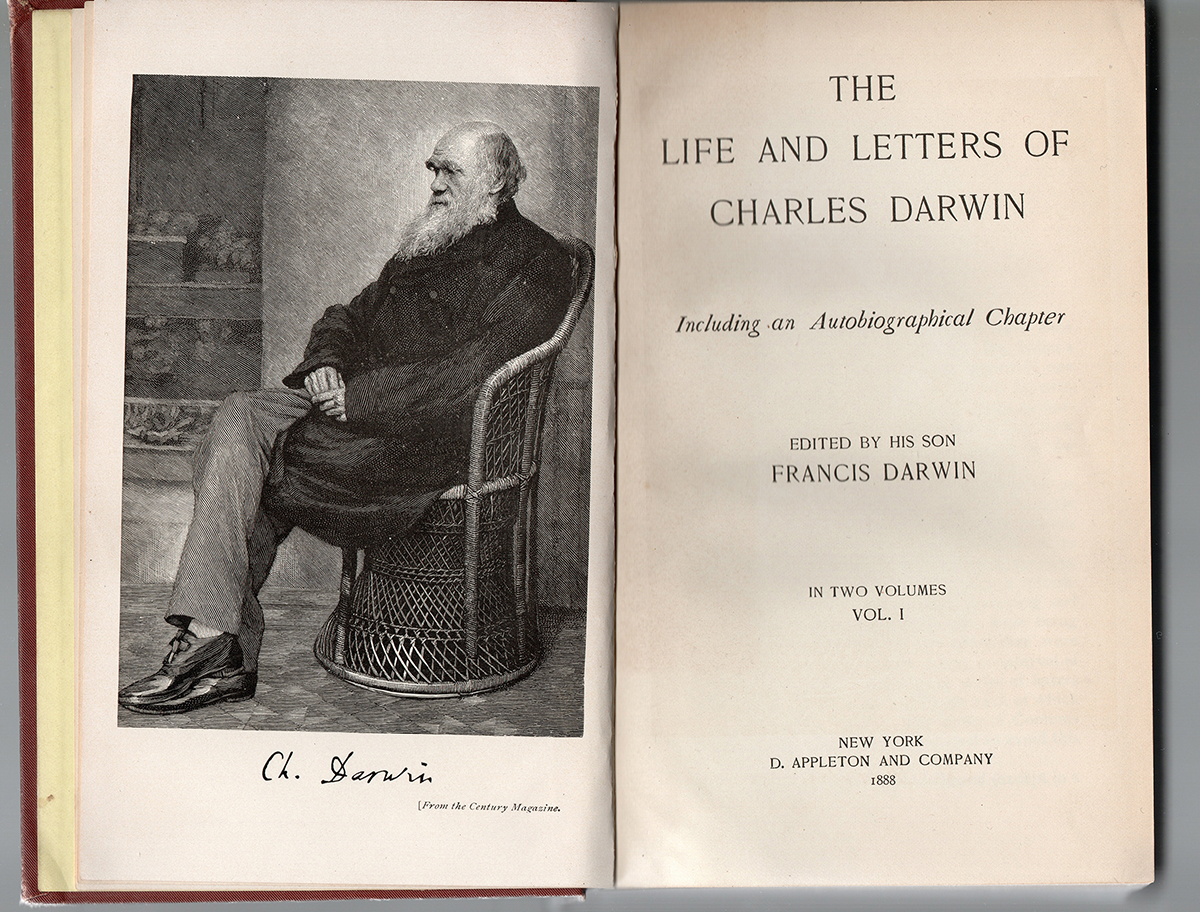
The James Loeb Society e. V. is delighted to announce an extraordinary new addition to its collection: a copy of the early 1888 edition of The Life and Letters of Charles Darwin, edited by Francis Darwin, Charles Darwin’s son, is returning to the intellectual sphere of its former owner, James Loeb.
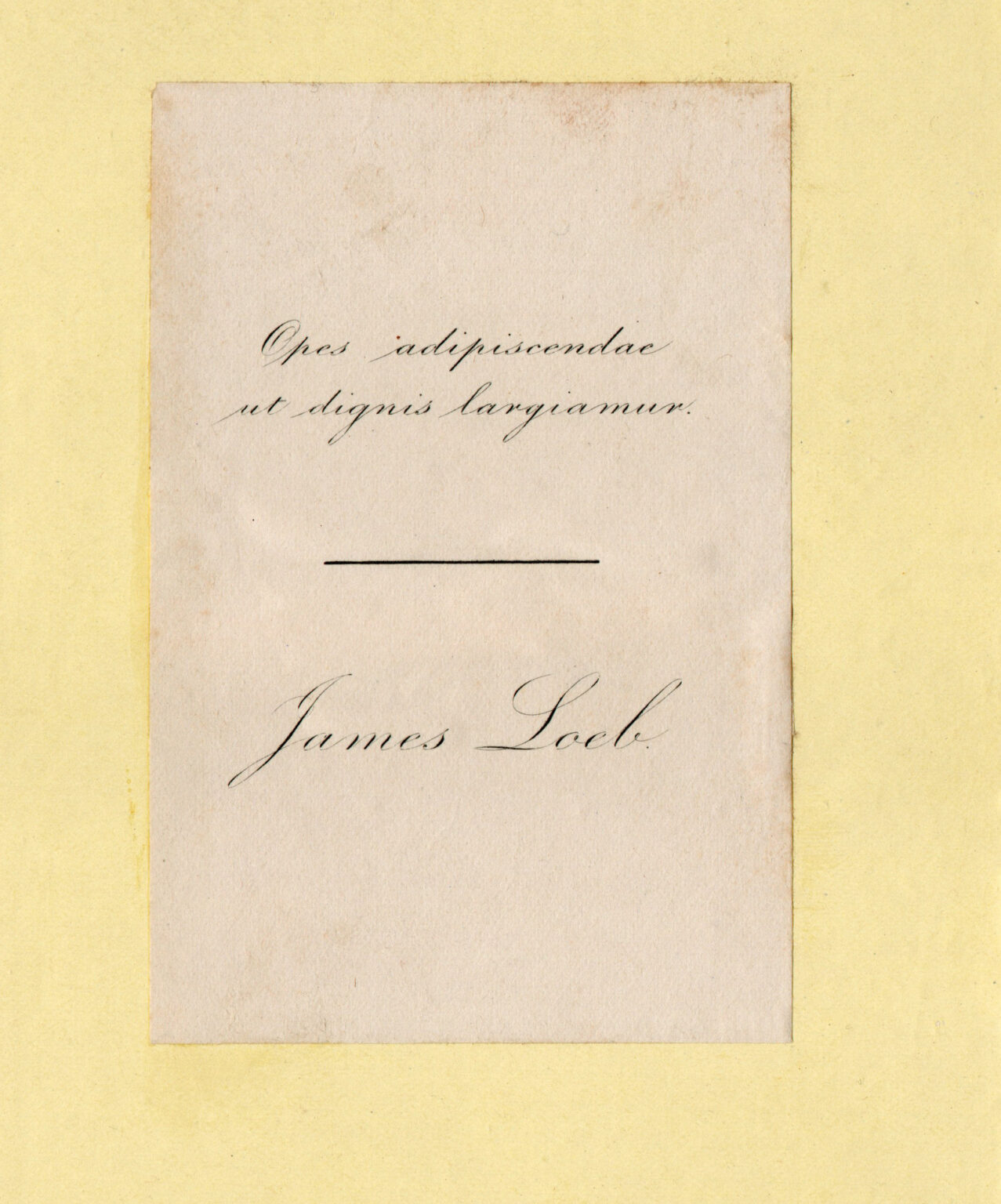
The book was preserved for many years by the Belgian collector Paul De Schepper of Lokeren. He had purchased the book in 2009 from a bookseller on the Isle of Man and only recently discovered that the endpaper bears a bookplate belonging to James Loeb. The elegant, calligraphic signature bears a remarkable resemblance to known early signatures by Loeb from the 1880s and 1890s.
The Spiritual World
What is particularly fascinating is not only the book’s provenance but also its cultural-historical context. The book was published precisely during the time when James Loeb was studying at Harvard University and moving in the intellectual circles of the American East Coast. By then, Charles Darwin had long since ceased to be merely a naturalist and had become a cultural phenomenon of global significance.
“This book offers a rare glimpse into James Loeb’s intellectual world,” explains Prof. Dr. Hans-Peter Söder, Chairman of the James Loeb Society. “It shows that classical humanism and the scientific debates of the modern era are by no means mutually exclusive. Rather, they belong to the same cultural horizon.”
The Latin Dedication
Of particular significance is also the Latin dedication in the book:
“Opes adipiscendae ut dignis largiamur.”
(“Wealth should be acquired so that it may benefit those who are worthy.”)
Today, the inscription reads almost like a guiding motto for Loeb’s later life. The banker, patron, and humanist dedicated his fortune to the advancement of education, the arts, and science. By founding the Loeb Classical Library—which remains world-famous to this day—he created one of the most significant educational projects of the 20th century. He also provided sustained support for archaeological, cultural, and humanistic endeavors.
For the James Loeb Society, the Darwin book therefore holds far more than just bibliophilic value. It impressively documents how closely scientific modernity and humanistic education were intertwined around 1900.
Scattered throughout the world
The previous owner, Paul De Schepper, who has been deeply engaged with Darwin, biology, and the history of evolution for many years, describes old books as vessels of living history: “There’s something special about reading these old books. You wonder who once held them in their hands, who gave them away, and what thoughts accompanied them.”
De Schepper also emphasizes that Darwin was significant not only as a scientist but also as a writer: “It’s less well known that Darwin was a great author. Some even consider him one of the best writers of the 19th century.”
The James Loeb Society views the fact that this work is now finding its way back to Murnau as a small cultural-historical event and as the symbolic return of a piece of intellectual history.