
James Loeb's Library: A Reader's Cosmos
– A treasure scattered far and wide
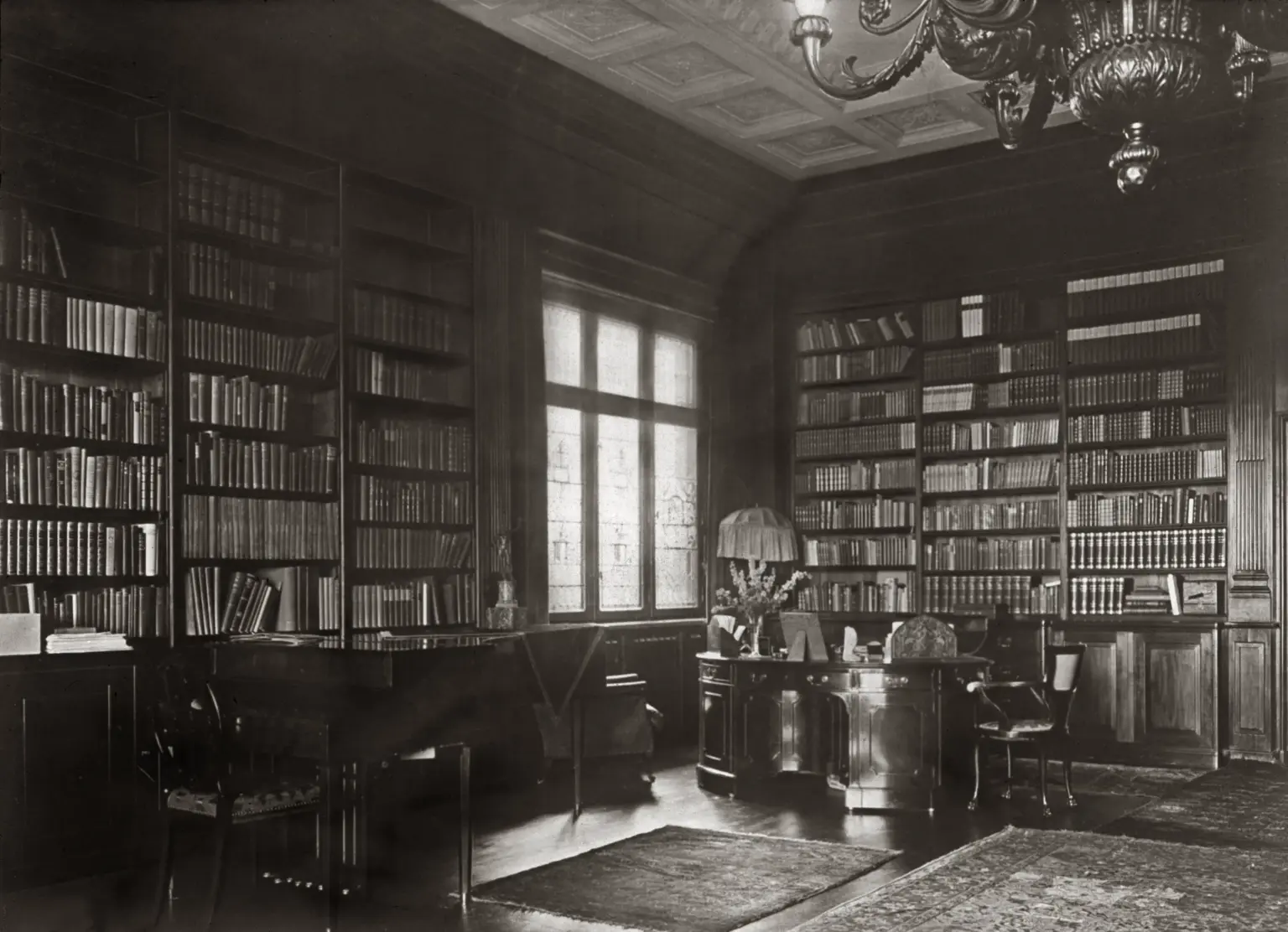
Anyone who wanted to understand what inspired James Loeb need only have taken a look at his library. It was far more than just the book collection of a wealthy art lover. Its wide thematic range reflected his curiosity and his conception of education: classical studies and archaeology stood alongside art history, music, and psychology; classical authors alongside Goethe, Heine, Dante, Ibsen, Stifter, and contemporary literature.
Loeb was not a collector who merely owned books. He read, studied, and worked with them. His library was part of that private intellectual space where his diverse interests converged: his engagement with antiquity, his love of art and music, and his exploration of the social and intellectual questions of his time.
The Legacy of Adolf Furtwängler
The library took on special significance due to Loeb’s friendship with the archaeologist Adolf Furtwängler, one of his most important scholarly mentors and advisors. Following Furtwängler’s death in 1907, Loeb purchased the Furtwängler family’s Munich home in 1908 and also acquired the scholar’s archaeological library and scholarly estate.
This collection was substantial. It comprised approximately 1,500 monographs and 700 dissertations, about 5,000 photographs, thousands of scholarly notes and extensive correspondence, as well as other material from Furtwängler’s archaeological work. Loeb later donated a large portion of the books to the Department of Classical Archaeology in Munich, thereby making them accessible once again to scholarly research.
A Library in Hochried
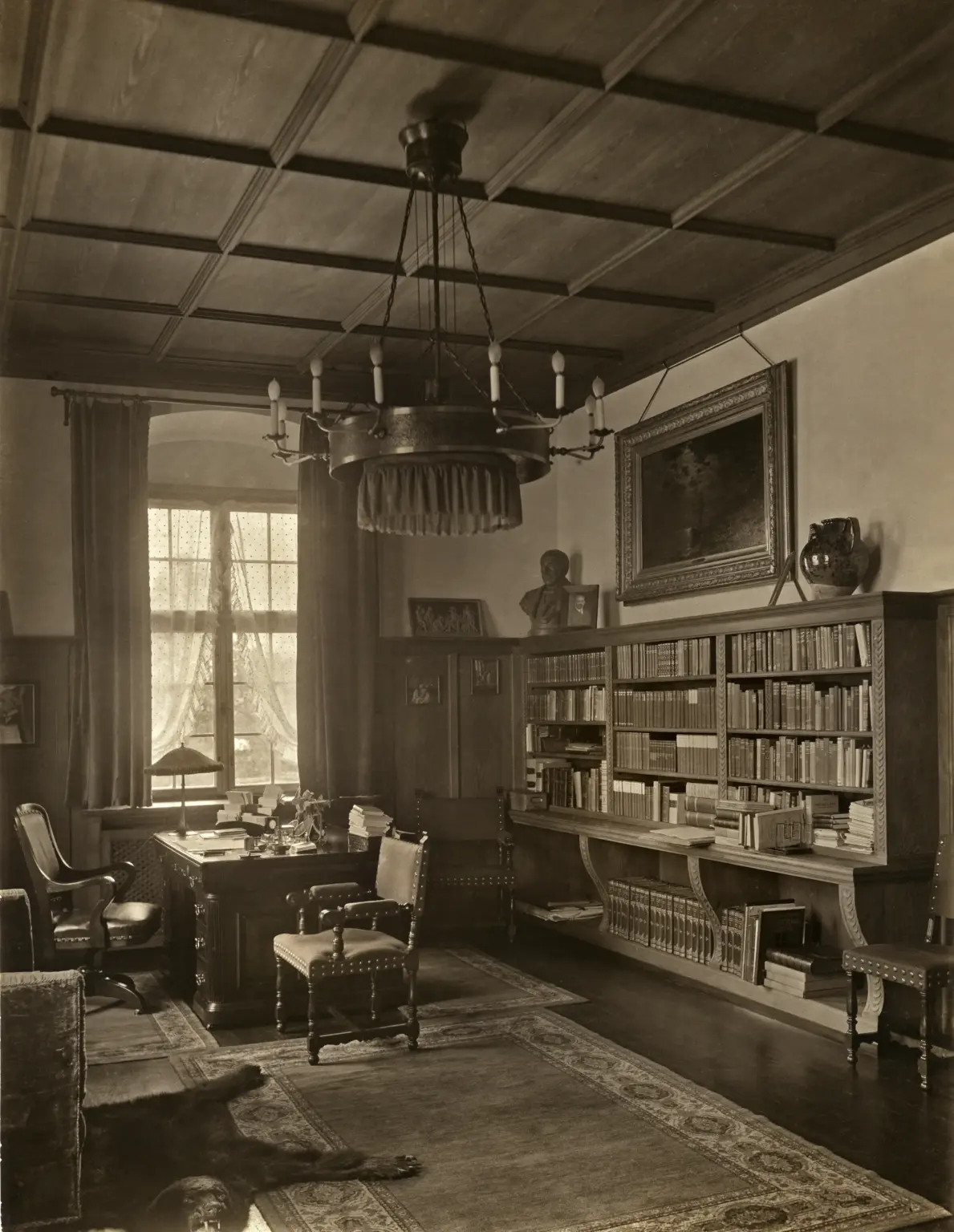
Once Hochried had become the center of Loeb’s life, the country house also gained its own library room. The books were kept there in close proximity to his significant collection of antiquities. Works of art and books, visual appreciation and reading, belonged together.
One can therefore easily imagine this place as the intellectual center of the house. Here, Loeb lived surrounded by the things that occupied his mind: the artifacts of antiquity, scholarly works, and literature spanning various centuries.
The library makes it clear that Loeb’s humanism was by no means focused solely on Greece and Rome. His interests extended far beyond that. For him, education meant establishing connections and fostering dialogue between different eras, cultures, and disciplines.
Scattered throughout the world
After James Loeb’s death in 1933, the library initially remained in Hochried. Its history, however, took a different course than that of his collection of antiquities and the Loeb Classical Library.
After World War II, the estate was repurposed. As part of its conversion into a sanatorium, Loeb’s library was sold to the Bouvier bookstore in Bonn. As a result, it was lost as a cohesive collection. The books, which had been collected over decades and were in some cases elaborately bound, were sold and scattered across the globe.
However, all traces of them have not been lost. Individual books from Loeb’s collection were later identified in academic libraries. For example, the Archaeological Institute at Goethe University Frankfurt holds volumes that can be attributed to Loeb’s library based on ownership marks and dedications. Some originally belonged to Adolf Furtwängler and still bear his handwritten annotations.
Thus, James Loeb’s library no longer exists as a unified whole. Yet its scattered books continue to tell the story of a man for whom reading, collecting, and research were all part of the same passion.
Perhaps this is precisely why the library is a particularly personal legacy of James Loeb: His art collection shows what he wanted to preserve. The Loeb Classical Library shows what he wanted to make accessible to others. His own library, however, shows what enabled him to know and understand throughout his life.